
River City Wellness Perspective
This PXDocs article is shared as parent education for families in Austin and nearby communities including South Austin, Buda, Circle C, Dripping Springs, and Central Texas. At River City Wellness, our team uses a nervous-system-focused lens to help families ask better questions about regulation, stress, sleep, digestion, and development.
This information does not replace medical care from your pediatrician. If your child has severe pain, fever, vomiting, blood in the stool, weight loss, dehydration, or other concerning symptoms, seek medical care promptly.
Pediatric chiropractic is a gentle, drug-free form of healthcare that uses age-appropriate adjustments to address subluxation and nervous system dysfunction in infants, children, and adolescents. Unlike adult chiropractic, it uses very low force, about the pressure you’d use to test a ripe tomato, and focuses on neurological function, not just spinal alignment.
When your family is stuck in a cycle of sickness and stress, or you’re a parent worn out from trying to help a child with ADHD, Autism, or anxiety, it’s hard to know where to turn. Traditional medicine usually means more specialists and more medications with rough side effects, and the internet piles on a flood of diet changes, detoxes, supplements, and essential oils until you’re more confused than when you started.
That’s where Neurologically-Focused Pediatric Chiropractic Care makes such a difference. Our PX Docs network looks at the whole child, not symptom by symptom or system by system, focusing on safely and naturally removing neurological interference so the nervous system can calm, balance, and regulate. Once that happens, the positive “side effects”—better sleep, stronger immune function, and more—tend to show up on their own.
What Is Pediatric Chiropractic Care?
Pediatric chiropractic care is a specialty within chiropractic that focuses on infants, children, and adolescents. Doctors of Chiropractic who pursue this specialty complete advanced training, most commonly through the International Chiropractic Pediatric Association (ICPA), which offers the CACCP certification (200+ hours of pediatric-specific coursework) and the DACCP diplomate. That training matters because caring for a six-week-old infant is fundamentally different from caring for a 40-year-old with low back pain.
The techniques used on children are not scaled-down adult adjustments. They’re a separate skill set built around gentle pressure, sustained contacts, and instrument-assisted methods designed for a developing spine and nervous system. Most pediatric adjustments use only a few ounces of force, well below what an adult adjustment requires.
What sets Neurologically-Focused Chiropractic Care apart from general pediatric chiropractic is the focus. We’re not chasing symptoms or “putting bones back in place.” We’re looking at how well your child’s nervous system is functioning, how it adapts to stress, regulates the body, and communicates between the brain and everything below it.
Understanding Pediatric Chiropractic Care
Before diving into the “side effects,” let’s explore more of Neurologically-Focused Chiropractic Care. This type of chiropractic care is dedicated to identifying and addressing subluxation, nervous system dysregulation, dysfunction, and dysautonomia and to restoring optimal neurological health and function for children and families. The nervous system functions as the “Air Traffic Controller” of the entire body, so optimal function of this system is crucial!
What is Subluxation?
Subluxation is a pattern of neurological dysfunction in the spine characterized by three components:
- Misalignment within the neurospinal system
- Fixation or restricted joint motion
- Neurological interference that disrupts communication between the brain and body.
It’s far more than a “bone out of place,” it’s a functional problem that affects how well the nervous system runs the show.
Digging back into your child’s case history, birth trauma has been found to be a huge contributing factor to subluxation and nervous system dysregulation. Birth trauma is any trauma or injury, most commonly physical (due to c-sections, forceps, or vacuum extractions, etc) that happens during the labor and delivery process and can lead to lifelong health challenges for children. In our clinical experience, 85–90% of the children we see with chronic challenges have a documented history of birth intervention or trauma.
Subluxation can also set in due to stress and toxicity overload. While stress is a normal part of life, what we call “The Perfect Storm” describes the cumulative sequence of neurological stressors—prenatal stress, birth trauma, and early childhood toxic load—that can overwhelm a child’s developing nervous system. When too much stress hits during the sensitive periods of early development, subluxation and dysautonomia set in.
What is Dysautonomia?
That last word matters. Dysautonomia is an imbalance within the Autonomic Nervous System—an overactivation of the sympathetic “fight or flight” gas pedal and an underactivation of the parasympathetic “rest, digest, and regulate” brake pedal, driven primarily by the vagus nerve. When a child is stuck in gas pedal mode, the body can’t sleep well, digest well, focus well, or regulate emotions well. That’s not a personality problem. That’s a nervous system problem.
The primary goal of Neurologically-Focused Pediatric Chiropractic Care is to restore balance and function to the nervous system, which will positively impact various functions and significantly improve the quality of life, even for challenging neurological conditions and chronic health challenges, such as ADHD, anxiety, Sensory Processing Disorder, etc.
Neurologically-Focused Chiropractors with advanced training in Pediatric Chiropractic Care have a deep understanding of neurodevelopment, neurosensory function, brain health, and more.
At What Age Can My Child Start Pediatric Chiropractic Care?
There’s no minimum age. Children can, and often should, receive their first chiropractic check within days of birth, especially after a difficult delivery. The earlier we can identify and address birth-related nervous system stress, the better the long-term outcomes tend to be.
Here’s how pediatric chiropractic shows up across the developmental stages:
- Newborns and infants (0–12 months): Often seen for colic, reflux, latching and breastfeeding difficulties, sleep struggles, constipation, plagiocephaly (flat spots), and torticollis. Adjustments at this age are extraordinarily gentle, fingertip pressure on specific spinal segments.
- Toddlers (1–3 years): Common reasons include recurrent ear infections, sleep regression, balance and motor coordination concerns, constipation, and supporting the spine through the falls and tumbles of learning to walk.
- Early childhood (4–7 years): Sensory Processing Disorder signs, behavioral and emotional regulation challenges, focus and attention concerns, recurrent illness, and ongoing digestive issues are common.
- School-age children (8–12 years): ADHD, anxiety, postural concerns from backpacks and screens, sports injuries, and headaches frequently bring families in.
- Adolescents (13–18 years): Teens often deal with stress-related dysautonomia symptoms—sleep problems, anxiety, headaches, gut issues, athletic performance—that respond well to nervous system-focused care.
The technique is matched to the child’s age and size every time. A six-week-old gets a completely different adjustment than a 16-year-old.
What Conditions Does Pediatric Chiropractic Help With?
Parents most commonly bring their children in for one of two reasons: a specific concern they’ve already tried to address through conventional medicine without success, or a desire for proactive wellness care from the start. The conditions and concerns we see most often fall into a few clusters.
Infant concerns:
- Colic and excessive crying
- Reflux and feeding difficulties
- Latching issues and torticollis
- Sleep struggles
- Constipation and digestive issues
- Recurrent ear infections
Developmental and behavioral concerns:
- ADHD and focus difficulties
- Autism Spectrum support
- Sensory Processing Disorder
- Anxiety and emotional dysregulation
- Speech and motor delays
- Sleep conditions
Immune and chronic concerns:
- Recurrent illness and weak immune response
- Asthma and allergies
- Bedwetting (enuresis)
- Tics and PANDAS/PANS
Here’s the thread that ties all of these together: they’re not separate problems. They’re different presentations of the same underlying issue—a nervous system stuck in sympathetic dominance, unable to regulate. That’s why so many parents tell us that when their child’s sleep improves, their digestion improves too. And when digestion improves, focus improves. And when focus improves, mood improves. The nervous system runs everything, so when you address it at the root, the improvements cascade.
It’s also important to be clear: Neurologically-Focused Chiropractic Care doesn’t “treat” any of these conditions. We address nervous system function. The body does the healing.
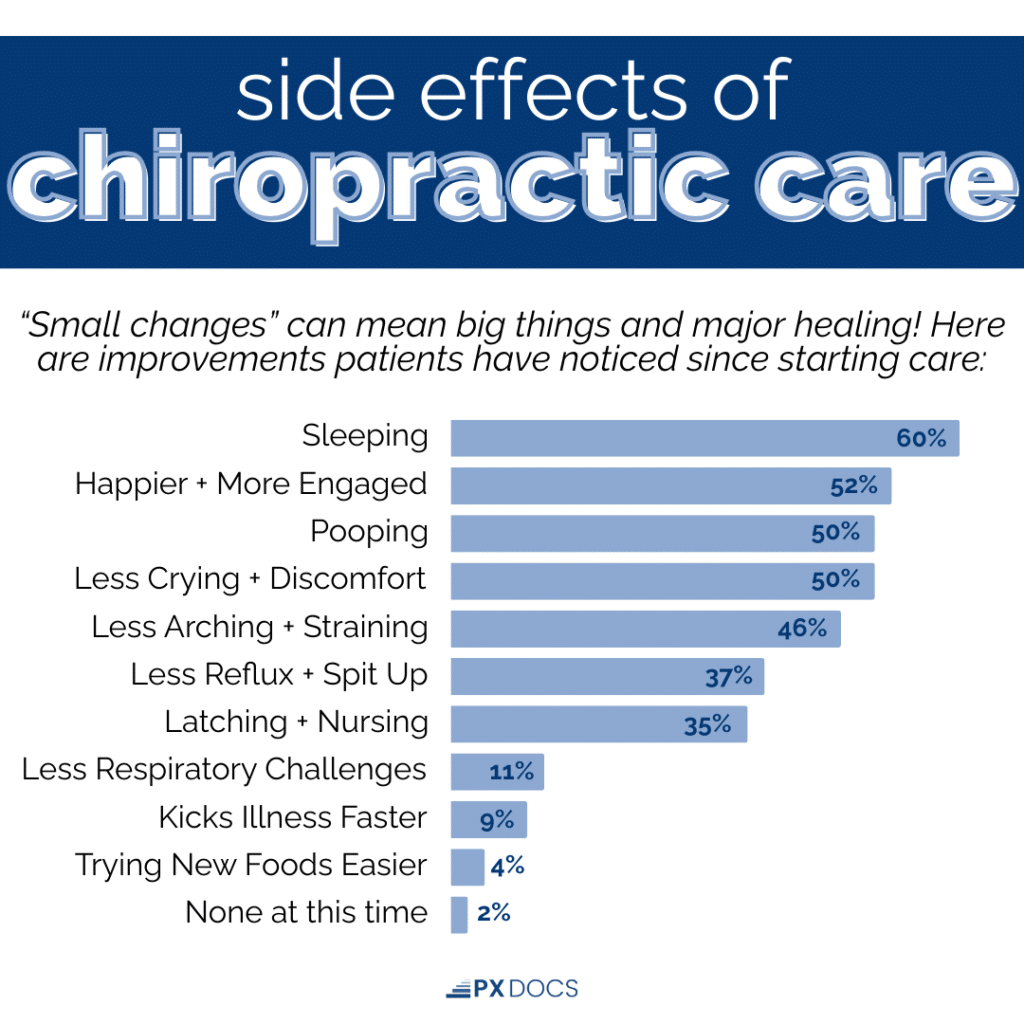
Positive Side Effects of Pediatric Chiropractic Care
In many cases, it can take some time to achieve big goals like improvements in speech and communication, seizures, behavior, focus, etc, but we know we’re on the path to get there if your child starts to experience other important changes and improvements in day-to-day quality of life and most importantly, changes and improvements on their INSiGHT Scans.
INSiGHT Scans are used to detect subluxation and neurological dysfunction. In just a 10-15 minute exam, these scans can find, measure, and locate dysautonomia and other elements of subluxation. This allows a PX Doc to create an exact, personalized, and customized care plan for your child.
Once this care plan begins, here are commonly reported side effects:
- Improved Sleep: Many parents report significant improvements in their children’s sleep patterns. Better sleep can lead to improved mood, behavior, and overall health.
- Enhanced Emotional Regulation: Children often show better emotional stability and fewer outbursts.
- Digestive Health: Improvements in colic, reflux, and other digestive issues are commonly reported.
- Cognitive Function and Focus: Enhanced brain function and improved focus are frequently noted benefits.
- Posture and Physical Development: Many children experience improved posture, which is crucial for proper growth and development.
- Immune System Support: Many families report fewer illnesses and quicker recovery times, a boost to immune function.
- Neurological Soft Signs: Parents often notice improvements in areas like mood regulation, social interaction, and motor skills, which some practitioners call “neurological soft signs.”
- Overall Well-being: Many children seem happier, more comfortable, and generally healthier after receiving care.
- Aid in Chronic Conditions: Many parents seek chiropractic care for children with specific conditions such as Autism, ADHD, epilepsy, allergies, or asthma, looking to address the root cause instead of covering up the symptoms with medications.
Pediatric Chiropractic Safety
Millions of kids and patients receive safe, gentle chiropractic adjustments every single year, and the safety of Pediatric Chiropractic Care is well documented. A landmark study reviewed 5,438 pediatric office visits across 577 children and reported only 3 minor adverse events and 0 serious adverse events. A more recent 2024 review concluded that the gentle, low-force techniques used with pediatric patients are markedly different from adult thrust manipulations and are safe.
One additional way I like to assess and explain the safety of chiropractic care and medical care is by examining malpractice claim rates and malpractice insurance costs for each profession. Malpractice insurance is a type of insurance that provides coverage for healthcare providers in case they are sued for medical malpractice. The cost of malpractice insurance is typically higher for professions that are considered to be at a higher risk of being sued.
The average annual premium for chiropractic malpractice insurance ranges from $1,000 to $2,500 per year. In contrast, the cost of malpractice insurance for medical doctors can vary widely depending on the specialty, geographic location, and claims history, but can often range from tens of thousands of dollars to even over $100,000 per year.
The actuarial scientists who set malpractice rates do not use their personal “beliefs” or other opinions; they rely on real-world facts, research, and data. Therefore, knowing that chiropractic malpractice rates are this low compared to those of medical doctors and specialists, it is quite inaccurate and misleading for any medical doctor or professional to try to scare parents away from Pediatric Chiropractic and state that it is “unsafe” when multiple scientific viewpoints prove the opposite to be true.
We work in collaboration with many wonderful pediatricians, nurse practitioners, neurologists, and other medical professionals who are up to date on the latest research and, more importantly, the goals and preferences of today’s parents seeking drug-free, safe, natural forms of care for their children. If any of our patient families are met with resistance or “scare care” from their conventional pediatrician or any provider, for that matter, we always encourage them to seek a second opinion from a different doctor who listens and aligns with their values and goals for care.
What Does the Research Show on Pediatric Chiropractic?
Beyond the safety data, a growing body of research points to meaningful clinical benefits in specific pediatric presentations:
- A 2021 randomized controlled trial in Frontiers in Pediatrics evaluated 120 colicky babies before and after gentle chiropractic care compared to 117 non-colicky babies. Colicky infants showed clear clinical evidence of vestibular dysregulation, and after care, 92.5% scored in the non-colicky range—a 96.5% improvement in the vestibular score. The authors framed colic as a behavioral expression of brainstem dysregulation, which lines up exactly with what we see clinically.
- A 2021 trial in Chiropractic & Manual Therapies followed 199 children ages 7–14 with recurrent headaches and found that those receiving spinal manipulation experienced fewer headache days and significantly greater perceived global improvement than controls.
- A long-term healthcare utilization study, published in the Journal of Manipulative and Physiological Therapeutics, found that patients in chiropractic-centered integrative care experienced 60% fewer hospital admissions, 59% fewer hospital days, 62% fewer outpatient surgeries, and 85% lower pharmaceutical costs compared to conventional medical management alone.
Is the pediatric research base as deep as we’d like it to be? No—and we say that openly. Most chiropractic research has historically focused on adults. But the studies that do exist consistently show two things: safety is excellent when care is delivered by appropriately trained practitioners, and meaningful clinical improvements are reported across colic, headaches, musculoskeletal pain, and healthcare utilization.
Not a Treatment or Cure
It’s important for all parents and even other providers to know that Neurologically-Focused Chiropractic Care does not promise a treatment or cure for any condition, acute or chronic, nor is that the actual goal of our care.
It’s important to note that this technology does not diagnose medical conditions, and Neurologically-Focused Chiropractic Care is certainly not a treatment or cure for ADHD, Autism, Sensory Processing Disorder, or any other condition, not even back pain. Instead, these INSiGHT Scans help us track down the root cause of nervous system dysfunction and dysregulation, and build customized care plans and adjusting protocols to help shift the nervous system back into a state of balance, regulation, and resilience.
What sets this approach apart from traditional medical care is that we address the root causes of dysfunction and illness in the body and nervous system, and make safe, specific adjustments that help restore and rebuild optimal function and healing mechanisms within the body itself.
This is why the “side effects” tend to be nearly all positive and helpful: the body is working to heal itself from the “inside out” rather than relying on chemicals and other procedures from the “outside in” to do the job. Because the body is so intelligent and organized, when this natural, drug-free form of healing occurs, the first things to improve are the “building blocks” of good health—sleep, digestion, immune response, movement, and so forth.
Each of our children is designed to heal and to be healthy and strong. While chronic illness is becoming far more common today, it’s not normal. Our kids are meant to be healthy, strong, resilient, and capable of healing all on their own—sometimes, they just need some extra help in the form of chiropractic adjustments to heal from and withstand this current way of living we all face each and every day!
Find Your PX Doc Today
If this kind of natural, drug-free healing approach sounds like a perfect fit for your family and you could use some “side effects” of better sleep, improved digestion, stronger immune systems, and so forth, then head on over to our PX Docs directory right away to find your local PX Doc!
Fill out the form right on the site and get scheduled for a consultation with a doctor who truly listens and cares, an exam that looks for and finds the root cause, and a care option that helps the body heal and recover from the “inside out” safely and naturally.
Frequently Asked Questions About Pediatric Chiropractic
Is pediatric chiropractic safe for babies?
Yes. Pediatric chiropractic adjustments for infants use only ounces of force—about the same pressure you’d use to check a ripe tomato. A 2009 practice-based survey of over 5,400 pediatric office visits documented zero serious adverse events, and a 2024 review in Clinical Pediatrics confirmed that pediatric chiropractic techniques are markedly different from adult adjustments and are considered safe when delivered by appropriately trained practitioners.
At what age can a baby see a chiropractor?
Babies can be checked within days of birth. Many parents bring their newborns in following difficult deliveries—c-sections, vacuum or forceps extractions, prolonged labor, or any positioning concerns. Earlier identification of birth-related nervous system stress generally produces better long-term outcomes.
How is pediatric chiropractic different from adult chiropractic?
Three big differences: force is dramatically lower (ounces, not pounds), techniques are age-appropriate and often instrument-assisted, and the focus is on nervous system function rather than pain relief. A pediatric adjustment looks nothing like an adult adjustment, and there’s usually no audible “pop.”
How often should my child see a chiropractor?
It depends on what brought you in. Children with active concerns typically start with more frequent visits during an initial corrective phase, then transition to less frequent wellness visits as the nervous system stabilizes. Children receiving proactive wellness care often see their chiropractor weekly to monthly. Your PX Doc will build a personalized plan based on your child’s INSiGHT Scan results and clinical picture.
Does my child need a referral from a pediatrician?
No. Doctors of Chiropractic are licensed primary portal-of-entry healthcare providers in every state, meaning families do not need a referral to schedule an appointment. That said, we work collaboratively with pediatricians, neurologists, occupational therapists, and other providers whenever it benefits the child.
What should I expect at our first visit?
A thorough case history covering pregnancy, birth, and developmental milestones; an INSiGHT Scan (HRV, sEMG, and thermal scans—a painless 10–15 minute neurological assessment); a physical exam; and a discussion of findings. If care is appropriate, you’ll receive a personalized care plan. Most parents are surprised at how calm and engaged their child is throughout. Many infants fall asleep during their first adjustment.
Questions Austin Parents Ask
Does River City Wellness use INSiGHT Scans?
Yes. INSiGHT Scans help our team measure patterns related to nervous system stress and regulation. They are non-invasive and give families objective information to discuss alongside their child’s health history.
Do INSiGHT Scans replace medical testing?
No. INSiGHT Scans do not diagnose disease or replace medical testing from your pediatrician. They are used as functional nervous system measurements within chiropractic care.
Where is River City Wellness located?
River City Wellness is located at 8708 S. Congress Ave Suite 570, Austin, TX 78745. We serve families from Austin and nearby communities including South Austin, Buda, Circle C, Dripping Springs, and Central Texas.
Originally published on PX Docs by Dr. Tony Ebel, DC, CPPFC, CCWP.
Synced to River City Wellness for educational purposes.