

River City Wellness Perspective
This PXDocs article is shared as parent education for families in Austin and nearby communities including South Austin, Buda, Circle C, Dripping Springs, and Central Texas. At River City Wellness, our team uses a nervous-system-focused lens to help families ask better questions about regulation, stress, sleep, digestion, and development.
This information does not replace medical care from your pediatrician. If your child has severe pain, fever, vomiting, blood in the stool, weight loss, dehydration, or other concerning symptoms, seek medical care promptly.
Autoimmune disease in children is a group of chronic conditions in which a child’s immune system mistakenly attacks the body’s own healthy cells and tissues. With over 80 identified autoimmune conditions and a pediatric prevalence of approximately 5%, these illnesses can affect virtually any organ system, from the joints and skin to the gut and nervous system, creating symptoms that are difficult to diagnose and even harder to care for.
If your child has been diagnosed with an autoimmune condition, or you’re watching unexplained symptoms pile up with no clear answers, you’re not alone. The rates of autoimmune disease in children have been rising steadily over the past several decades. This article goes beyond the basics to explore the neurological factors most doctors overlook, and why addressing your child’s nervous system function may be the missing piece.
What Causes Autoimmune Disease in Children?
Autoimmune disease in children develops from a combination of genetic susceptibility, environmental triggers, and immune system dysregulation that converge during critical periods of development. Research shows that roughly one-third of the risk is tied to genetic factors, while infections, toxins, medications, dietary factors, and chronic stress can push a genetically susceptible child’s immune system past its tipping point.
Girls are up to four times as likely as boys to develop an autoimmune disease, with notable exceptions like type 1 diabetes, which affects both genders equally.
These risk factors don’t operate in isolation. They stack on top of each other, and the timing matters enormously.
This is exactly what Dr. Tony Ebel’s “Perfect Storm” concept describes: the cumulative sequence of neurological stressors, from prenatal stress to birth trauma to early childhood toxic load, that can overwhelm a child’s developing nervous system, leading to subluxation, dysautonomia, and chronic health challenges, including immune dysfunction.
What Are the Signs and Symptoms of Autoimmune Disease in Children?
Symptoms of pediatric autoimmune disease are often vague, come and go, and mimic other common childhood illnesses. A large-scale 2025 study analyzing over 1.5 million children found significant increases in the incidence of multiple autoimmune diseases in pediatric populations, yet noted that nonspecific symptom presentation continues to delay diagnosis.
Common signs of autoimmune disease in children include:
- Recurring fevers without a clear infection
- Persistent fatigue that doesn’t improve with rest
- Unexplained rashes or skin changes
- Joint pain or swelling
- Digestive problems like chronic diarrhea or constipation
- Delayed growth and development
- Frequent infections or difficulty recovering from illness
- Unexplained weight loss or poor appetite
What’s important to understand is that many of these signs, especially fatigue, digestive issues, frequent infections, and inflammatory responses, share a common root that goes deeper than the immune system itself. They point to underlying nervous system dysregulation.
What Is the Connection Between the Nervous System and Autoimmune Disease in Children?
The Autonomic Nervous System directly regulates immune function through the vagus nerve, the longest cranial nerve in the body, extending from the brainstem through the neck, chest, and abdomen. The vagus nerve serves as the primary driver of the Parasympathetic Nervous System, regulating heart rate, digestion, immune function, inflammation, and emotional regulation.
Think of your child’s Autonomic Nervous System like a car with two pedals. The Sympathetic Nervous System is the “gas pedal” (fight-or-flight response), while the Parasympathetic Nervous System, driven primarily by the vagus nerve, is the “brake pedal” (rest, digest, and regulate). When subluxation is present, the gas pedal gets stuck, and the brake pedal can’t engage.
When the vagus nerve functions properly, it releases acetylcholine, a neurotransmitter that signals immune cells to regulate inflammatory responses. This is called the cholinergic anti-inflammatory pathway, and research has shown it’s one of the body’s most important mechanisms for preventing excessive inflammation. But when vagal tone is low, cytokines go unchecked, inflammation becomes chronic, and the stage is set for autoimmune activation.
This is dysautonomia—an imbalance within the Autonomic Nervous System, specifically an overactivation of the sympathetic “fight or flight” response and an underactivation of the parasympathetic “rest, digest, and regulate” response. For children with autoimmune disease, this pediatric dysautonomia is often a driving factor behind their Autonomic Nervous System dysfunction and immune dysregulation.
How Does “The Perfect Storm” Set the Stage for Immune Dysfunction?
The “Perfect Storm” often begins before birth and unfolds across three critical stages:
- Prenatal Stress and Fertility Challenges. When a mother experiences chronic stress during pregnancy, her body releases elevated levels of cortisol that cross the placenta and directly affect the developing fetal nervous system. Fertility treatments, prenatal stress, anxiety, and certain medications during pregnancy can all shift the baby’s Autonomic Nervous System toward sympathetic dominance before the child even takes their first breath. This early neurological imbalance sets the foundation for immune dysregulation down the road.
- Birth Trauma and Interventions. The birth process itself, especially when it involves interventions like C-sections, forceps, vacuum extraction, or induction, can create physical strain on the brainstem and upper cervical spine where the vagus nerve originates. This is birth trauma, and it can result in subluxation—a pattern of neurological dysfunction characterized by misalignment within the neurospinal system, fixation or restricted joint motion, and neurological interference that disrupts communication between the brain and body. When subluxation affects the vagus nerve from day one, the body’s ability to regulate inflammation and immune responses is compromised from the start.
- Early Childhood Environmental Triggers. After birth, factors like antibiotic overuse, frequent ear infections, environmental toxins, processed foods, and chronic medication use stack additional stress on an already overwhelmed nervous system. Each additional stressor pushes the system further into sympathetic dominance and further away from the parasympathetic regulation needed for healthy immune function. For a developing neuro-immune system, this creates an overwhelming toxic load that can tip a genetically susceptible child into autoimmune activation.
When the nervous system gets stuck in sympathetic “fight or flight” mode, it steals energy from other systems in a predictable sequence. The motor system suffers first, then the gut, and then the immune system. This is why so many children with autoimmune disease also have a history of digestive issues and developmental delays. The progression—colic and reflux as infants, then constipation and food sensitivities, then chronic inflammation and eventually autoimmune activation—follows the neurology.
Children with autoimmune disease frequently also experience conditions like Autism, ADHD, Sensory Processing Disorder, anxiety, and emotional dysregulation. This co-occurrence isn’t coincidental—these conditions share common neurological roots in vagus nerve dysfunction, sympathetic dominance, and Autonomic Nervous System dysfunction driven by subluxation.
How Can INSiGHT Scans and Neurologically-Focused Chiropractic Care Help?
INSiGHT Scans are a set of three neurological assessment technologies used by Neurologically-Focused Chiropractors:
- NeuroThermal scans (infrared thermography)
- NeuroCore sEMG scans (surface electromyography)
- Heart Rate Variability (HRV) testing.
Together, they objectively measure nervous system function, subluxation patterns, and autonomic balance.
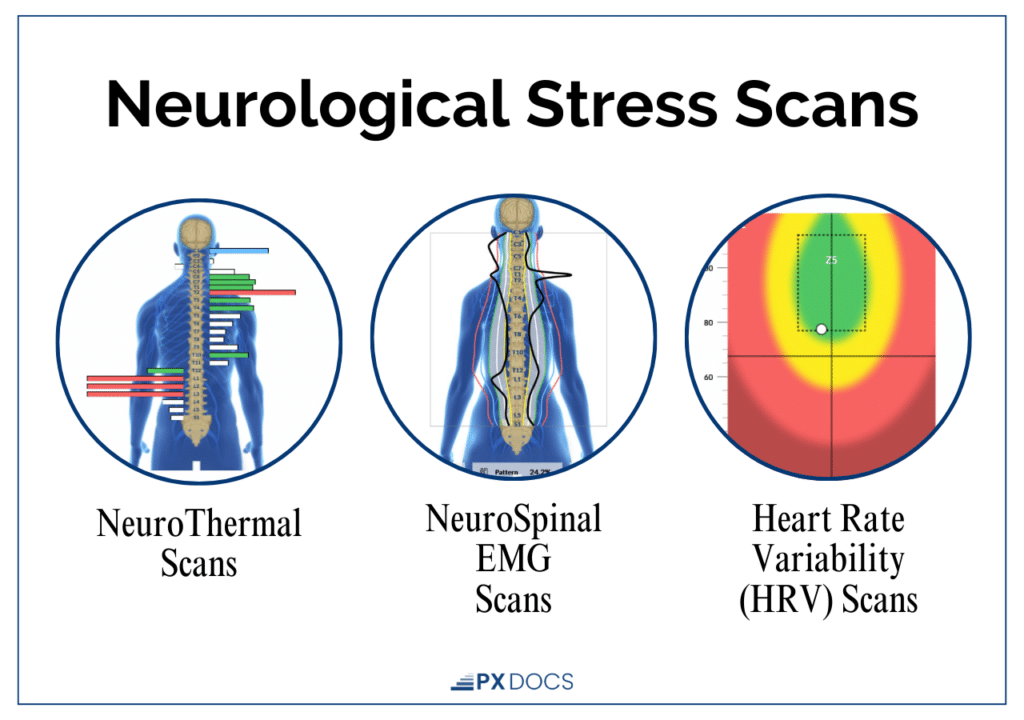
It’s important to note that this technology does not diagnose medical conditions, and Neurologically-Focused Chiropractic Care is certainly not a treatment or cure for autoimmune disease or any other condition, not even back pain. Instead, these INSiGHT Scans help us track down the root cause of nervous system dysfunction and dysregulation, and build customized care plans and adjusting protocols to help shift the nervous system back into a state of balance, regulation, and resilience.
For children with autoimmune disease, HRV is especially important because it provides a direct window into how well the Parasympathetic Nervous System is regulating the immune response. Low HRV indicates sympathetic dominance and poor vagal regulation—exactly the autonomic pattern that allows inflammation to go unchecked.
Neurologically-Focused Chiropractic Care is a specialized approach that identifies and addresses subluxation, nervous system dysregulation, and dysautonomia through advanced neurological assessment and precise, gentle adjustments tailored to each patient’s individual neurological patterns.
As nervous system regulation improves, families often report improvements across multiple areas: sleep, digestion, emotional regulation, and energy levels. This care works best alongside continued pediatric and specialist care, anti-inflammatory nutrition, stress reduction, and adequate sleep.
Taking the Next Step for Your Child
The nervous system controls and regulates every function in your child’s body, including the immune system. When subluxation, dysautonomia, and vagus nerve dysfunction are present, they create the conditions for chronic inflammation and immune dysregulation. Addressing these neurological factors doesn’t replace your child’s medical care—it adds a foundational layer that most conventional approaches don’t consider. Visit the PX Docs Directory to find a trained Neurologically-Focused Chiropractor near you. Schedule a consultation that includes a full case history review and INSiGHT Scans to get an objective picture of your child’s nervous system function. Your child deserves a care plan that addresses the root cause, not just the symptoms.
Frequently Asked Questions About Autoimmune Disease in Children
What is the most common autoimmune disease in children?
Celiac disease is one of the most commonly diagnosed autoimmune diseases in children, particularly in kids under three years old. Type 1 diabetes and juvenile idiopathic arthritis are also among the most frequent. The overall global prevalence of autoimmune diseases in children is approximately 5%.
Can a child outgrow an autoimmune disease?
Most autoimmune diseases are chronic conditions that require ongoing management rather than conditions a child will outgrow. However, severity can fluctuate significantly over time, and many children experience periods of remission. Addressing underlying nervous system dysregulation may help support the body’s ability to better regulate immune responses.
Are autoimmune diseases in children getting more common?
Yes. Research published in Current Opinion in Immunology found that the worldwide incidence and prevalence of autoimmune diseases have been increasing significantly over the past several decades. Environmental factors, including changes in diet, toxin exposure, stress levels, and antibiotic use, are believed to be major contributing factors.
What is the connection between gut health and autoimmune disease in children?
Approximately 70-80% of the immune system resides in the gut, making gut health a critical factor in immune regulation. The gut-brain axis, regulated by the vagus nerve, plays a central role in coordinating immune responses between the digestive system and the rest of the body.
Can chiropractic care treat autoimmune disease in children?
Neurologically-Focused Chiropractic Care is not a treatment or cure for autoimmune disease or any other condition. It addresses nervous system dysfunction and dysregulation, specifically subluxation, that may interfere with the body’s ability to properly regulate immune responses. By restoring autonomic balance and improving vagal tone, this care supports the body’s natural regulatory mechanisms.
Questions Austin Parents Ask
Does River City Wellness treat childhood constipation?
We do not diagnose or treat digestive disease. Our role is to evaluate whether nervous system stress and spinal function may be affecting how well the body regulates. Many families use this information alongside guidance from their pediatrician.
When should I call my child’s pediatrician?
Call your pediatrician or seek medical care if your child has severe pain, fever, vomiting, blood in the stool, weight loss, dehydration, constipation in a young infant, or symptoms that are getting worse.
Where is River City Wellness located?
River City Wellness is located at 8708 S. Congress Ave Suite 570, Austin, TX 78745. We serve families from Austin and nearby communities including South Austin, Buda, Circle C, Dripping Springs, and Central Texas.
Originally published on PX Docs by Dr. Morgan Reimer.
Synced to River City Wellness for educational purposes.