

River City Wellness Perspective
This PXDocs article is shared as parent education for families in Austin and nearby communities including South Austin, Buda, Circle C, Dripping Springs, and Central Texas. At River City Wellness, our team uses a nervous-system-focused lens to help families ask better questions about regulation, stress, sleep, digestion, and development.
This information does not replace medical care from your pediatrician. If your child has severe pain, fever, vomiting, blood in the stool, weight loss, dehydration, or other concerning symptoms, seek medical care promptly.
Autistic meltdowns are often misunderstood and can be challenging for both children and their caregivers. They are not the same as typical tantrums and require a unique approach to manage effectively. To better support kids on the spectrum and their families, it’s crucial to understand the root causes of these episodes and the role the nervous system plays in emotional regulation.
There’s nothing more heart-wrenching for a parent than watching their child completely lose control—screaming, kicking, collapsing to the floor—especially when it happens in public. The stares, the judgment, and the helplessness all crash in at once. But what many don’t understand is that an autistic meltdown isn’t a behavior problem at all. It’s the visible signal of a nervous system stuck in sensory overwhelm.
For kids with Autism, the world is often too loud, too bright, too fast, and too overwhelming for a nervous system already stuck in stress mode. What looks like “bad behavior” on the outside is really a brain and body crying out for help on the inside.
Sadly, far too many parents face these autistic meltdowns almost daily, with 1 in 31 children now diagnosed with Autism Spectrum Disorder (ASD), and most families know the exhausting cycle of managing meltdowns all too well.
In this article, we’ll explore the causes, signs, and strategies for the prevention and management of autistic meltdowns. More importantly, we’ll discuss how a Neurologically-Focused approach to care can help address the root cause and improve outcomes for kids with Autism.
What Is an Autistic Meltdown?
An autistic meltdown is an intense, involuntary response to an overwhelming situation. It happens when a person with Autism becomes completely overwhelmed by their environment and loses control of their behavior. During a meltdown, they may cry, scream, lash out physically, or shut down entirely. It’s important to understand that a meltdown is not a temper tantrum, nor is it a deliberate attempt to manipulate or control a situation.
Key differences in meltdowns vs tantrums:
- Tantrums are typically a planned behavior used to achieve a specific goal or outcome, such as getting a toy or avoiding an undesired activity. Meltdowns, on the other hand, are involuntary reactions to feeling overwhelmed and are not goal-oriented.
- Control: During a tantrum, a child maintains some degree of control over their actions. During a meltdown, the child loses control due to the extreme emotional and physiological arousal they are experiencing.
- Duration and resolution: Tantrums usually end when the child gets what they want or realizes it isn’t working. Meltdowns often last much longer and can continue even after the initial trigger has been removed.
Meltdowns are common among children with Autism, with some studies suggesting that up to 92% of children with Autism experience meltdowns at some point. Meltdowns can happen to individuals across the autism spectrum and are not limited to those with higher support needs. Even highly verbal adults with Autism may experience meltdowns when faced with overwhelming situations.
What Triggers an Autistic Meltdown?
Meltdowns in children with Autism can be caused by a variety of factors, ranging from sensory overload to emotional stress. Understanding these triggers is essential for preventing and managing meltdowns effectively.
One of the most common causes is sensory overload. Many individuals with Autism have heightened sensitivity to sensory input, which means that even seemingly minor stimuli can be overwhelming. Common sensory triggers include:
- Loud noises, such as fire alarms, school bells, or even the sound of a vacuum cleaner
- Flickering or bright lights
- Strong smells, like perfume or cleaning products
- Uncomfortable clothing or textures, such as itchy tags or rough fabric
- Crowded or chaotic environments, like a busy shopping mall or a noisy classroom
When exposed to these triggers, a child with Autism may feel overloaded and unable to cope, leading to an autistic meltdown.
The “Perfect Storm” Behind Autism Meltdowns
At PX Docs, we recognize that autism meltdowns aren’t caused by a single issue but rather by a combination of factors that create a “Perfect Storm” of sensory and emotional overwhelm. This concept highlights how multiple stressors—sensory overload, changes in routine, communication challenges—interact to significantly increase the likelihood of a meltdown.
In addition to the more obvious environmental or external triggers, the internal ones are also super important for parents of children with Autism to know and understand. Kids on the spectrum struggle significantly not only with sensory overload from sounds and bright lights, but also from the following internal meltdown triggers:
- Digestive issues: When the nervous system is stuck in sympathetic dominant “fight or flight” mode and dysregulated, a child’s digestive motility and overall function is often limited significantly. When a child feels off and uncomfortable with their nervous and digestive systems on the inside, it leaves them far more sensitive to sensory overwhelm from external stressors.
- Immune and respiratory challenges: The underlying nervous system dysregulation also leaves children with Autism with a suppressed and compromised immune system and respiratory system, leaving them often feeling sick, exhausted, and unwell — which further increases their sensitivity to outside stressors.
- Sensorimotor and positional sense challenges: While not discussed nearly as often as the other sensory meltdown triggers, children with Autism often experience significantly disrupted sensorimotor and proprioceptive input, tone, and coordination.
Communication difficulties also play a significant role. Many children with Autism struggle to express their needs or feelings effectively, leading to frustration and escalating emotional responses. When combined with a sudden change in routine or unanticipated events, these factors can quickly compound, leaving the child feeling helpless and out of control.
What Does an Autistic Meltdown Look Like?
Recognizing the early warning signs is crucial for parents, caregivers, and professionals working with children on the spectrum. By identifying these signs, you can intervene early and potentially prevent a meltdown from escalating.
One of the most common behavioral changes that may indicate an impending meltdown is increased stimming. Stimming, short for self-stimulatory behavior, refers to repetitive actions or movements that help a person with Autism regulate their sensory input. Examples of stimming include:
- Rocking back and forth
- Flapping hands or flicking fingers
- Spinning or twirling objects
- Humming or repeating words or phrases
While stimming is a normal and necessary behavior for many individuals with Autism, an increase in the frequency or intensity of these behaviors may signal that the child is feeling overwhelmed and is at risk of a meltdown.
Other behavioral changes to watch for include pacing, withdrawal from social interaction, covering one’s ears or eyes, and verbal outbursts such as screaming or crying. Some children may also attempt to escape from the situation, a behavior known as eloping. Older children and teens may also lose the ability to “mask”—that is, the effort they normally put into appearing neurotypical in school or social settings can collapse just before a meltdown, which is one of the clearest signs that the nervous system has run out of capacity to cope.
In addition to these behavioral signs, there may be physiological indicators of an impending autistic meltdown. These can include:
- A flushed or red face
- Rapid breathing or hyperventilation
- Increased heart rate
- Sweating
- Trembling or shaking
- Tense muscles, especially in the jaw, shoulders, or hands
It’s important to note that every child with Autism is unique, and their warning signs may vary. By closely observing a child’s behavior and learning to recognize their individual warning signs, parents and caregivers can respond more effectively to their needs.
When these early warning signs are noticed, it’s essential to act quickly to help the child regulate their emotions and sensory input. This may involve providing a calming, quiet space, offering sensory tools or activities, or simply offering reassurance and support. By intervening early, it may be possible to prevent an autistic meltdown from occurring or at least reduce its intensity and duration.
Strategies for Preventing Autism Meltdowns
While it may not be possible to prevent all meltdowns, there are several strategies that parents, caregivers, and professionals can use to reduce their frequency and intensity. One of the most important strategies is to identify and minimize triggers.
Creating a sensory-friendly environment is a key aspect of minimizing triggers. This may involve:
- Dimming lights or using soft, natural lighting
- Minimizing background noise with soundproofing or white noise machines
- Providing comfortable, soft clothing without tags or irritating seams
- Offering sensory tools like weighted blankets, noise-canceling headphones, or fidget toys
Some examples of strategies to avoid a meltdown include:
- Visual supports: These can help children with Autism express their needs and feelings. For example, a child who struggles with verbal communication may be able to point to a picture or use a visual chart to indicate that they are feeling overwhelmed or need a break.
- Emotional regulation: Teaching self-regulation and coping strategies can help children with Autism manage emotions and sensory input. Techniques like deep breathing, progressive muscle relaxation, and calming activities, such as listening to calming music or using a stress ball, can be beneficial. Practicing these skills during calm moments prepares children to use them effectively when they are overwhelmed.
- Consistent routines: Consistent routines and schedules are crucial for preventing meltdowns in children with Autism, as they thrive on predictability. A clear daily routine helps them feel secure and less anxious. When changes are needed, prepare the child in advance with visual supports like picture schedules or social stories. Research has found that maintaining consistent routines has been linked to a 47% increase in improved social-emotional health.
While these strategies can be helpful, it’s important to recognize that they may not address the underlying neurological issues that contribute to meltdowns. This is where Neurologically-Focused Chiropractic Care can play a crucial role.
Our specialized form of chiropractic care can help promote overall nervous system balance and functioning by identifying and addressing imbalances and dysregulation, often leading to a significant decrease in parent reports of meltdowns and other sensory overload-related challenges.
Managing an Autistic Meltdown When It Happens
Despite our best efforts to prevent meltdowns, they may still happen from time to time. When a child with Autism is experiencing a meltdown, the primary focus should be on ensuring their safety and providing a calm, supportive presence.
First and foremost, it’s crucial to make sure the child is not in danger of harming themselves or others. If necessary, gently guide them to a safe space away from any potential hazards. Remember that during a meltdown, a child may have little control over their actions, so it’s important to remain vigilant and prioritize safety.
When addressing a child during a meltdown, stay calm and avoid frustration. Use simple, clear language and speak slowly and softly. Refrain from overwhelming them with questions, and instead, offer compassion by acknowledging their feelings without judgment. Use phrases like “I see you’re upset” and reassure them that they are safe and the meltdown will pass.
Every child with Autism is unique, and what works to calm one child may not work for another. Some children may find comfort in deep pressure, like a tight hug or being wrapped in a weighted blanket. Others may prefer to be left alone in a quiet, dimly lit room. Some may benefit from sensory tools like noise-canceling headphones or a favorite fidget toy.
An individualized plan for managing meltdowns is crucial, tailored to the child’s specific needs and developed with parents, caregivers, and healthcare professionals. Regularly review and update the plan as the child grows and develops. After a meltdown, give the child time and space to recover, as they may feel exhausted or confused. Offer gentle support without rehashing details, and focus on helping them regain calm and emotional regulation.
The post-meltdown window matters more than most parents realize. A few simple things help:
- Stay calm and keep your tone gentle
- Give your child time to rest and recover before transitioning to anything new
- Offer comfort like a hug or a weighted item, only if your child wants it
- Make space for a calming activity, including stimming and preferred items
- Talk about what happened only after your child is genuinely ready
Autistic Meltdown vs. Shutdown vs. Burnout
A meltdown isn’t the only way a nervous system with autism signals it has run out of capacity. Two related, and often confused, responses are shutdown and burnout. Understanding the difference matters because what helps in each situation is different.
An autism shutdown occurs when the nervous system crosses the fight-or-flight threshold and enters a “freeze” state. Instead of screaming or lashing out, the child may stop talking, withdraw, go limp, or simply check out. To an outside observer, it can look like stubbornness, defiance, or “ignoring you,” but it’s the same overwhelm as a meltdown, just expressed in the opposite direction. The body is protecting itself by powering down.
Autistic burnout is the longer-term version of the same story. When a child experiences repeated meltdowns and shutdowns without sufficient recovery between them, the nervous system remains stuck in a depleted state for days, weeks, or even months. Burnout often shows up as exhaustion, loss of skills like speech or self-care, and a noticeable drop in tolerance for things that used to be manageable. Researchers describe it as a state of chronic exhaustion and loss of skills brought on by years of being overtaxed. It’s a system running on fumes.
From a Neurologically-Focused perspective, all three sit on the same spectrum of nervous system dysregulation. Meltdown is the gas pedal floored. Shutdown is the brake pedal slammed. Burnout is the engine giving out. That’s why simply teaching coping skills isn’t enough on its own; the system underneath those behaviors needs support, too.
The Neurological Foundation of Autistic Meltdowns
Autistic meltdowns trace back to the Autonomic Nervous System (ANS), which controls emotional regulation and sensory processing.
Think of the ANS like a car: the Sympathetic Nervous System is the gas pedal, kicking into “fight, flight, or freeze” when there’s a threat. The Parasympathetic Nervous System is the brake pedal, bringing the body back into “rest, regulate, and digest.” In children with Autism, those two pedals don’t share the load evenly—the gas pedal is always pressed down, and the brake barely works. This imbalance is called dysautonomia, and it’s why kids on the spectrum struggle so much to regulate their emotions and respond to sensory input. The “freeze” piece matters too: when a nervous system gets pushed past fight-or-flight, it can drop into a shutdown state — which is why some autistic meltdowns end not in screaming but in silence.
Subluxation is the other neurological piece. It has three components: misalignment of the spinal segments, fixation (the joint gets stuck), and the neurological interference that follows. Together, these distort sensorimotor and proprioceptive input flowing into the brain. Subluxation keeps the sympathetic system jacked up and can interfere directly with the vagus nerve and parasympathetic nervous system — exactly the systems a child needs to access during overwhelming moments.
Vagus nerve dysfunction is also often implicated. When the vagus isn’t firing well, you get Sensory Processing Disorder, trouble with emotional regulation, and impaired social engagement.
The PX Docs Approach to Supporting Children with Autism
At PX Docs, we recognize the complex neurological factors that contribute to autistic meltdowns and other challenges faced by children on the spectrum. Our approach is centered around identifying and addressing nervous system dysregulation through Neurologically-Focused Chiropractic Care.
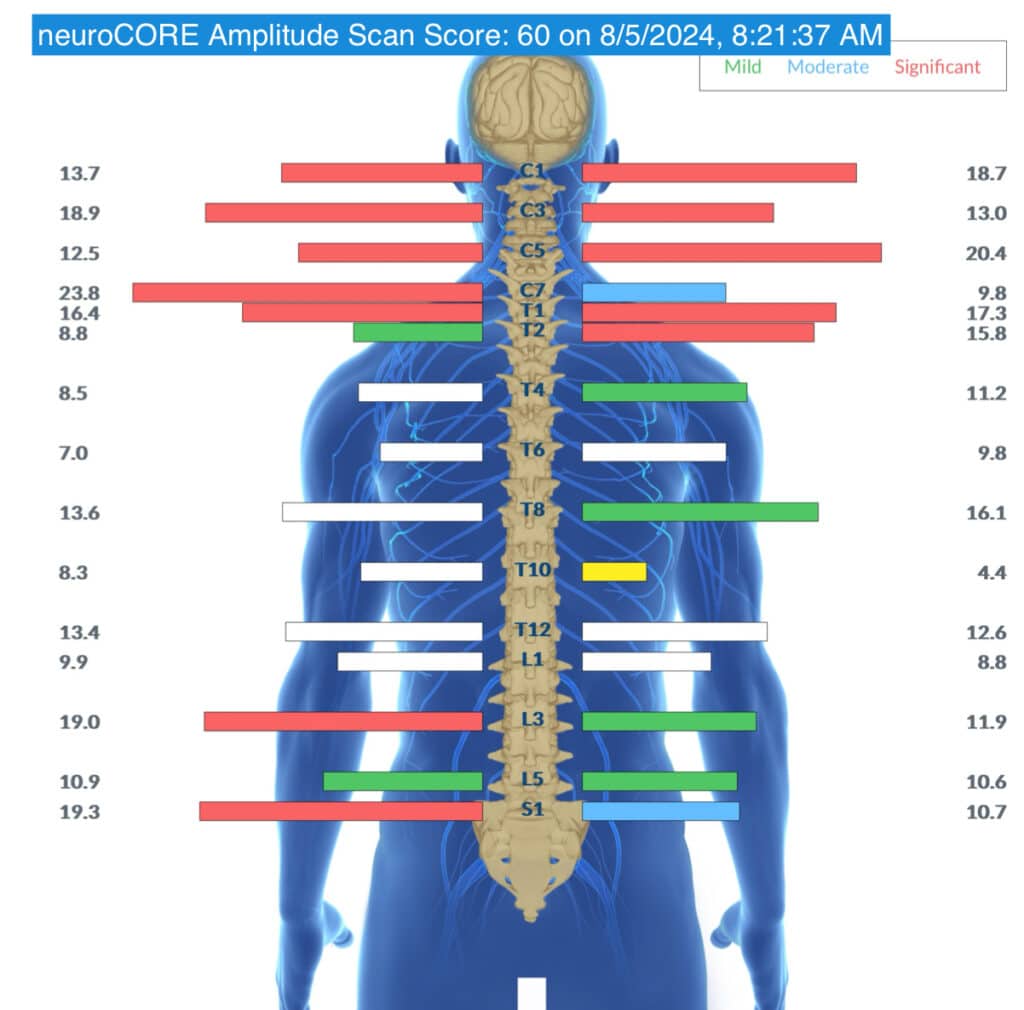
One of the key tools we use in our practice is INSiGHT scanning technology, which enables us to objectively assess a child’s nervous system function and pinpoint areas of subluxation and dysregulation. By gathering this detailed information, we can create customized care plans that target the specific needs of each individual child.
This EMG scan, for example, shows a common pattern we see in children who struggle with major meltdowns: areas of overwhelming sympathetic “stress” activity (red), alongside layers of deep exhaustion from years of subluxation and nervous system dysregulation (yellow).
In addition to our Neurologically-Focused Chiropractic Care, we also prioritize patient education and empowering families with the knowledge and resources they need to support their child’s development. We recognize that a child’s success depends not only on the care they receive in our office but also on the support and understanding they have at home and in their community.
To this end, we work closely with parents, caregivers, and other healthcare professionals to ensure a collaborative, whole-child approach to care. By working together and addressing the root causes of autism challenges, we can help children with Autism thrive and reach their full potential.
Supporting Your Child’s Neurological Health and Well-being
Autistic meltdowns can be challenging for both children and their families, but by understanding the underlying causes and implementing effective strategies for prevention and management, it is possible to reduce their frequency and intensity.
Every child with Autism is unique, and what works for one may not work for another. Approach meltdowns with compassion, patience, and a willingness to adapt to your child’s individual needs.
By creating a supportive environment, teaching self-regulation skills, and seeking out Neurologically-Focused Care when needed, you can help your child build resilience and thrive in the face of challenges.
If you suspect that your child’s meltdowns may be related to underlying neurological imbalances, we invite you to visit our PX Docs directory and find a chiropractor near you. With the right support, your child can develop the tools to manage their emotions, navigate sensory challenges, and build positive relationships with the world around them.
Frequently Asked Questions About Autistic Meltdowns
How long does an autistic meltdown last?
There’s no fixed duration. Meltdowns can last anywhere from a few minutes to over an hour, and the recovery period afterward can stretch even longer. The length depends on how overloaded the nervous system is, the age of the child, and how quickly the environment can be calmed. Younger children often have shorter but more frequent meltdowns; older kids and teens may have longer ones with deeper exhaustion afterward.
What’s the difference between an autistic meltdown and a tantrum?
A tantrum is goal-directed; the child wants something and is using behavior to get it. A meltdown is an involuntary response to sensory or emotional overload, and the child has no control over what’s happening. Tantrums usually stop when the goal is reached or clearly out of reach. Meltdowns keep going until the nervous system settles, even if the original trigger is long gone.
Can adults have autistic meltdowns?
Yes. Autistic meltdowns happen across the lifespan and across the entire autism spectrum, including in highly verbal adults. The triggers may look different—workplace stress, sensory environments in public, social demands—but the underlying mechanism is the same: a nervous system pushed beyond its capacity to cope.
What’s the difference between an autistic meltdown and a shutdown?
A meltdown is the nervous system in fight-or-flight mode, externalized as crying, screaming, or lashing out. A shutdown is the nervous system in freeze mode, internalized as silence, withdrawal, or going limp. Both come from the same root cause of overwhelm. Some autistic people experience mainly meltdowns, others mainly shutdowns, and many experience both.
Can autistic meltdowns be prevented?
Not every meltdown is preventable, but many are. Tracking triggers, creating sensory-friendly environments, building predictable routines, and supporting the underlying nervous system through care like Neurologically-Focused Chiropractic can all reduce frequency and intensity over time.
How do you de-escalate an autistic meltdown in the moment?
Safety first, then reduce sensory input—lower lights, lower voices, lower demands. Don’t ask questions or try to reason. Stay nearby but give physical space unless your child seeks contact. Most meltdowns need to run their course; your job is to keep the environment safe and calm until the nervous system can come back online.
PX Docs has established sourcing guidelines and relies on relevant, and credible sources for the data, facts, and expert insights and analysis we reference. You can learn more about our mission, ethics, and how we cite sources in our editorial policy.
Questions Austin Parents Ask
How does River City Wellness use PXDocs articles?
We share these articles as parent education. During visits, our team evaluates nervous system and spinal function to help families better understand regulation, stress, sleep, digestion, focus, and development.
Does this replace my child’s medical care?
No. This information does not replace diagnosis, treatment, or follow-up from your pediatrician or another medical professional. Seek medical care for severe, new, or worsening symptoms.
Where is River City Wellness located?
River City Wellness is located at 8708 S. Congress Ave Suite 570, Austin, TX 78745. We serve families from Austin and nearby communities including South Austin, Buda, Circle C, Dripping Springs, and Central Texas.
Originally published on PX Docs by Dr. Tony Ebel, DC, CPPFC, CCWP.
Synced to River City Wellness for educational purposes.