
River City Wellness Perspective
This PXDocs article is shared as parent education for families in Austin and nearby communities including South Austin, Buda, Circle C, Dripping Springs, and Central Texas. At River City Wellness, our team uses a nervous-system-focused lens to help families ask better questions about regulation, stress, sleep, digestion, and development.
This information does not replace medical care from your pediatrician. If your child has severe pain, fever, vomiting, blood in the stool, weight loss, dehydration, or other concerning symptoms, seek medical care promptly.
PANS in children, short for Pediatric Acute-Onset Neuropsychiatric Syndrome, is a clinical condition where kids suddenly develop severe OCD behaviors, restricted eating, or other neuropsychiatric changes, typically between ages 3 and puberty. Signs can reach full intensity within 24-48 hours, often following an infection or major stressor. PANS is closely related to PANDAS (Pediatric Autoimmune Neuropsychiatric Disorders Associated with Streptococcal Infections), which is now considered a subset of PANS specifically linked to strep infections.
PANS and PANDAS are more common than you might think. Research estimates these conditions affect as many as 1 in 200 children. Rates have been climbing as the “Perfect Storm” of prenatal stress, birth trauma, and early childhood toxic load hits kids earlier and more often than ever before.
For parents, the experience is terrifying. Your once carefree, happy-go-lucky child suddenly becomes consumed by intense fears and compulsions—washing their hands raw, refusing to eat, or having severe meltdowns over the smallest things. Many families bounce from specialist to specialist, then into functional or integrative medicine, spending thousands on testing, supplements, and detox kits—what we call healing interventions overload. Yet the approach still feels like chasing anxiety and other symptoms instead of addressing the dysregulated nervous system underneath.
At PX Docs, we offer a different perspective on PANS in children—one focused on restoring balance to your child’s most critical system: nervous system regulation. The interplay between the sympathetic and parasympathetic branches of the Autonomic Nervous System, along with the vagus nerve, holds the key to unlocking real healing in even the toughest chronic cases.
What Is PANS in Children?
PANS (Pediatric Acute-Onset Neuropsychiatric Syndrome) is a clinical diagnosis given to children who experience a dramatic, sometimes overnight, onset of severe neuropsychiatric signs. The defining feature is the sudden appearance of Obsessive-Compulsive Disorder (OCD) behaviors or severely restricted food intake, along with other concerning signs. Studies have found that 5% of children with OCD fit the diagnostic criteria for PANS or PANDAS.
The PANS criteria used by clinicians include:
- Sudden, acute onset of OCD or severe eating restrictions
- Presence of at least two other neuropsychiatric signs occurring at the same time, such as:
- Anxiety
- Depression or mood swings
- Irritability or aggression
- Behavioral regression (acting much younger than their age)
- Sudden deterioration in school performance
- Motor or sensory abnormalities
- Somatic signs like sleep disturbances or urinary frequency
- Signs are not better explained by another known medical or neurological condition
How PANS and PANDAS Differ
PANDAS is a subset of PANS where the sudden onset is specifically linked to a streptococcal infection, typically strep throat or scarlet fever. The five diagnostic criteria for PANDAS are:
- Significant obsessions, compulsions, and/or tics
- Abrupt onset and an episodic, relapsing-remitting course
- Onset between the ages of three and puberty
- Association with streptococcal infection (positive throat culture or recent strep history)
- Co-occurring neuropsychiatric signs similar to PANS
The simplest way to think about it: all PANDAS is PANS, but not all PANS is PANDAS. PANS can be triggered by many infections, immune challenges, or environmental stressors. PANDAS specifically requires the strep connection.
What Are the Signs of PANS in Children?
Children with PANS may show a wide range of distressing changes that significantly interfere with daily life. What truly sets PANS apart from typical OCD or anxiety is how fast the signs appear. Where typical OCD develops gradually over weeks, months, or years, PANS in children commonly hits full intensity within 24-48 hours.
Common signs parents notice first include:
- Extreme separation anxiety and clinginess
- Deterioration in handwriting and math skills
- Sensory processing sensitivities, aversion to textures, sounds, or lights
- Restrictive eating driven by contamination fears or fears of choking
- Hallucinations or unusual fears
- Severe behavioral regression
- Tics, motor twitches, or involuntary movements
- Sudden nighttime bedwetting or daytime urinary frequency
- Sleep disturbances and night terrors
- Out-of-character rage, aggression, or self-injurious behavior
Some children become so consumed by contamination fears that they stop eating, rapidly losing weight. Others suddenly act much younger than their age, regressing to baby talk or wanting to sleep in their parents’ bed. The speed and severity of these changes often leave parents feeling frightened and overwhelmed.
PANS in children is also episodic, meaning signs may disappear for stretches of time and then come roaring back. Many families spend months searching for answers, pursuing costly specialist visits and medical tests. The emotional and financial toll cannot be overstated.
Acute Flares With a Chronic Underlying Picture
What makes PANS so difficult to manage is that the condition is both an acute issue and a chronic issue at the same time. The “flares” during growth spurts, immune challenges, and stressful seasons of life are the acute pieces that need immediate attention. But it’s the chronic presence of subluxation—a combination of misalignment, fixation, and neurological interference—along with dysautonomia and vagus nerve dysfunction that drives the acute hypersensitivity and flare-ups in the first place.
To get results that truly last, providers must dig deep and address the foundational root causes of the chronic neurological dysregulation and exhaustion at play. Once you understand the progression of subluxation and dysregulation into pure neurological depletion, it becomes easier to see why caring for these tough cases takes a long time and tends to have an up-and-down “rollercoaster” pattern.
The “Perfect Storm”: Triggers and Risk Factors for PANS in Children
At PX Docs, we often use the term “Perfect Storm” to describe the events and environmental factors that lead to PANS in children. This framework recognizes that these conditions don’t have a single cause but result from a complex interplay of stressors that overwhelm the nervous system, often starting as far back as fetal and infant development.
One of the most well-known triggers for PANS in children is infection, particularly Group A Streptococcus (the bacteria that causes strep throat). Many children experience a sudden onset of neuropsychiatric signs following a strep infection, leading researchers to hypothesize that the immune system’s response may mistakenly attack the basal ganglia and other brain regions, causing inflammation and dysfunction. This post-infectious autoimmune response is what makes PANS, in many cases, a form of neuroinflammation closely related to autoimmune encephalitis.
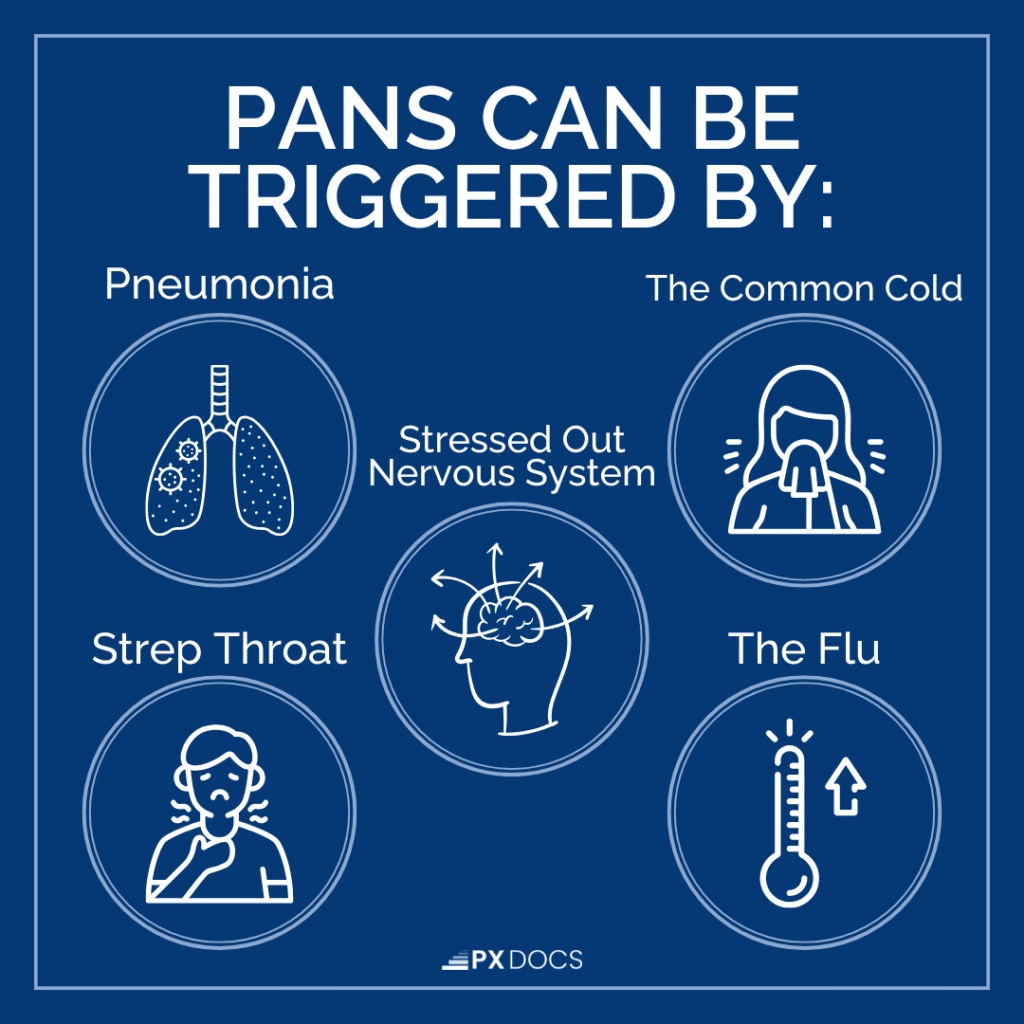
But strep is not the only trigger. Other infections—influenza, Lyme disease, mycoplasma pneumoniae, even the common cold—have all been associated with the onset of PANS in children or with flare-ups. Environmental factors like exposure to mold, chemicals, or heavy metals may also play a role by disrupting immune function and neurodevelopment.
The “Perfect Storm” concept looks even deeper than these acute triggers. The strep or other infection may have been the “straw that broke the camel’s back,” but it’s rarely the original or only issue that triggered the storm.
The “Perfect Storm” framework also encompasses the cumulative impact of early-life stressors that prime both the nervous and immune systems for dysfunction, leaving a child more susceptible to PANS. These stressors include:
- Fertility and prenatal distress: Research shows that maternal stress during pregnancy can impact fetal brain development, as can earlier stress during the fertility process, which is linked to increased risk of autism and other neurodevelopmental conditions. This primes the child’s nervous system for heightened reactivity to future stressors.
- Birth interventions and trauma: Complications during labor and delivery—prolonged labor, forceps or vacuum extraction, induction, or emergency C-section—can cause physical stress and injury to the delicate tissues of the head and neck. This birth trauma is often the first cause of subluxation and dysfunction within the brainstem region, setting the stage for future nervous system dysregulation and delays.
- Overuse of toxins and antibiotics: Antibiotic overuse disrupts the gut microbiome, environmental toxin overload burdens detox systems, and poor nutrition, illness, injury, or emotional trauma all contribute to nervous system dysregulation.
When the “Perfect Storm” factors come together, they lead to subluxation and dysautonomia, an imbalance in the Autonomic Nervous System. The ANS regulates essential functions, including heart rate, digestion, and immune response. Because of this underlying neurological imbalance, a child becomes far more susceptible to acute triggers that activate PANS. This same neurological imbalance is also why children with PANS often go on to develop POTS (Postural Orthostatic Tachycardia Syndrome)—research shows POTS is significantly more common in kids with PANS than in the general population.
The vagus nerve is a major player here. We’ve long known the vagus nerve regulates heart rate, respiration, and digestion. We now know it’s also crucially connected to the modulation and suppression of inflammation, plus behavioral and emotional regulation. Those are the exact functions that go haywire with PANS in children, which means vagus nerve stimulation may be one of the most important interventions for this complex condition, more so than anything else out there.
By understanding the multifactorial nature of PANS, we can approach it more completely. Rather than just suppressing signs or chasing individual triggers, we must address the underlying nervous system dysfunction that leaves a child susceptible in the first place.
How Is PANS in Children Diagnosed?
Diagnosing PANS in children is notoriously challenging. There’s no blood test or imaging study that confirms PANS; it’s a diagnosis of exclusion. Health care providers must rule out many other conditions first. Because infections, anxiety, and tic conditions are all common in childhood, diagnosis often requires a thorough clinical evaluation including detailed history, physical exam, lab work, and sometimes blood tests for recent strep exposure.
The acuity of the onset and the age at onset are what distinguish PANS from other conditions like typical OCD or anorexia nervosa.
Multi-disciplinary collaboration with immunology, rheumatology, neurology, and psychiatry is often necessary in complex presentations. Because no single specialty owns this condition, families often face frustrating gaps in care.
Conventional Medical Approaches and the PX Docs Perspective
The conventional medical approach to PANS in children primarily focuses on suppressing signs and addressing active infections. Doctors may prescribe psychiatric medications—antidepressants, SSRIs, or antipsychotics—to control OCD, anxiety, or aggression. Antibiotics are often used to address strep or other bacterial infections that may be triggering signs. In severe cases, immunomodulatory therapies like IVIG or plasmapheresis may be recommended to suppress the overactive immune response.
While these interventions can offer some relief, they often fail to address the root causes and may actually worsen immune dysfunction in the long term. Medications mask signs without correcting underlying neurological imbalances, and repeated antibiotic use disrupts the gut microbiome, which is vital for brain health. We approach PANS not merely as an autoimmune issue, but as the result of nervous system dysregulation and dysautonomia. Our focus is on identifying and addressing the underlying neurological dysfunction that contributes to these signs.
The PX Docs Approach to PANS in Children
In children with PANS, the Autonomic Nervous System is often stuck in a state of sympathetic dominance. The sympathetic side is overactive—driving chronic inflammation, anxiety, and digestive issues—while the parasympathetic side, and the vagus nerve in particular, is underactive, making it difficult for the body to relax, heal, and regulate itself. This imbalance is dysautonomia, and it’s frequently triggered by subluxation. And subluxation is usually first triggered by the sequence of early-life stressors known as “The Perfect Storm,” discussed at length earlier.
By addressing subluxation and supporting the proper function of the ANS and vagus nerve, PX Docs aim to restore balance to the nervous system as a whole. This approach recognizes that real healing from PANS in children requires more than sign management or antibiotics. It requires identifying and addressing the underlying neurological imbalances that make a child susceptible to triggers in the first place.
Our approach to PANS in children begins with a thorough assessment of your child’s nervous system function. We use INSiGHT scanning technology to objectively measure and visualize areas of neurological stress or imbalance that may be contributing to your child’s signs.
It’s important to note that this technology does not diagnose medical conditions, and Neurologically-Focused Chiropractic Care is certainly not a treatment or cure for PANS or any other condition, not even back pain. Instead, INSiGHT Scans help us track down the root cause of nervous system dysfunction and dysregulation, and build customized care plans and adjusting protocols that help shift the nervous system back into a state of balance, regulation, and resilience.
The INSiGHT scans include:
- Heart Rate Variability (HRV): Measures the balance and adaptability of the Autonomic Nervous System.
- Surface Electromyography (sEMG): Shows patterns of neuromuscular tension, asymmetry, and incoordination, helping pinpoint areas of primary or major subluxation and nervous system dysfunction.
- Thermal Scanning: Measures skin temperature patterns that correlate with Autonomic Nervous System function and inflammation, allowing us to look more deeply into neuro-gastro-immune dysfunction than labs or stool tests alone can.
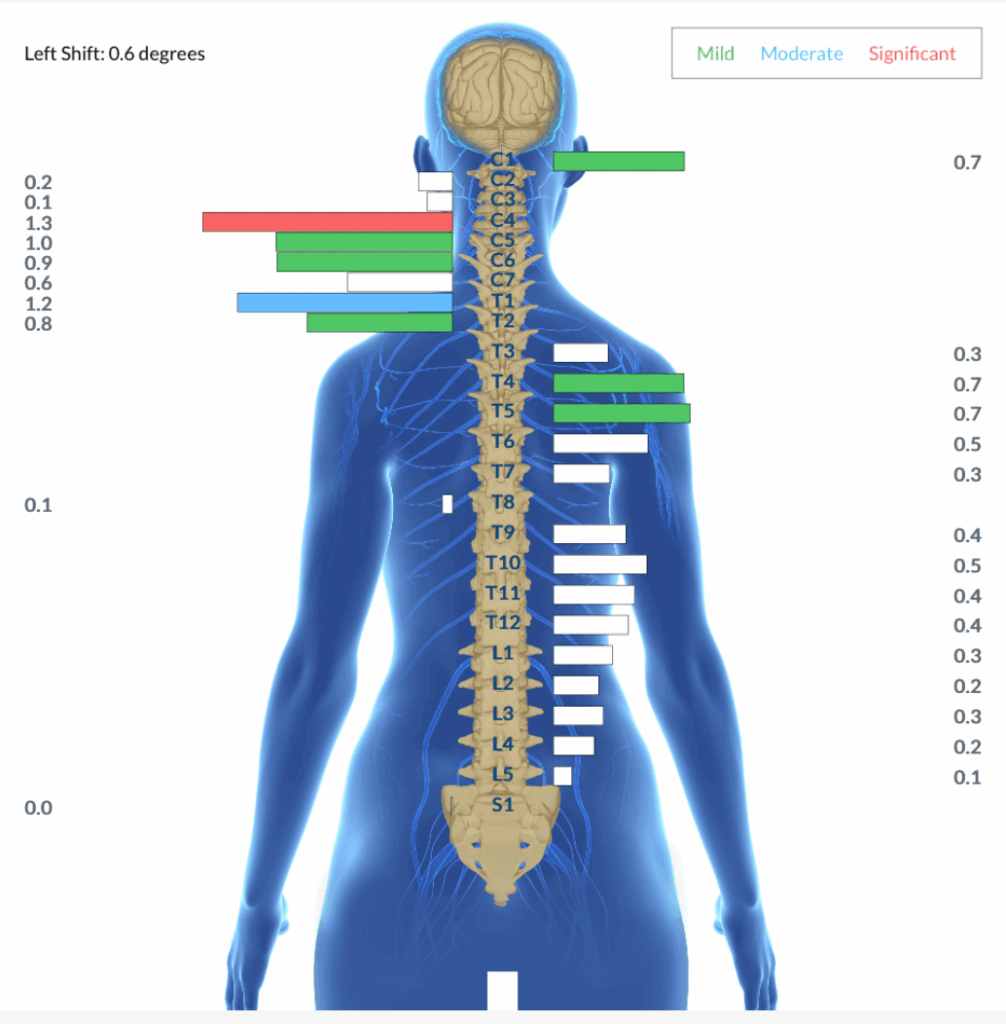
PX Docs practitioners combine scans, health history, and physical exams to identify the areas of your child’s nervous system that need support. This information shapes a personalized care plan targeting the root causes of dysfunction, focused on Neurologically-Focused Chiropractic Care adjustments to address subluxations, reduce nerve interference, and support nervous system regulation.
Hope for Healing: You’re Not Alone
If you’re a parent struggling with your child’s PANS diagnosis, know that you’re not alone. The fear, frustration, and overwhelm you feel are valid. But there is hope, and there are providers ready to stand with you and fight for your child’s health and healing potential.
Our mission is to provide families with the resources, support, and care they need to navigate this challenging path. We believe every child deserves the opportunity to thrive, and that true healing comes from empowering the body’s innate wisdom, not just masking symptoms.
If you’re ready to explore a different approach for PANS in children—one that addresses the root causes and helps build resilience for the future—we invite you to visit our directory and find a PX Docs practitioner near you. With their expertise in pediatric neurological care and commitment to a natural, root-cause approach, they can help guide you toward a brighter tomorrow.
The path forward may not be easy, but you don’t have to walk it alone. With compassion, perseverance, and a willingness to look beyond the conventional paradigm, healing is possible.
PX Docs has established sourcing guidelines and relies on relevant, credible sources for the data, facts, and expert insights we reference. You can learn more about our mission, ethics, and how we cite sources in our editorial policy.
Questions Austin Parents Ask
Does River City Wellness treat ADHD?
We do not diagnose or treat ADHD. Our role is to evaluate how nervous system stress, posture, sleep, and spinal function may influence regulation and focus. Many families use this information alongside care from their pediatrician, therapist, or other professionals.
When should my child get medical or behavioral support?
Seek professional support if attention, impulsivity, sleep, behavior, or learning challenges are affecting school, safety, relationships, or daily family life.
Where is River City Wellness located?
River City Wellness is located at 8708 S. Congress Ave Suite 570, Austin, TX 78745. We serve families from Austin and nearby communities including South Austin, Buda, Circle C, Dripping Springs, and Central Texas.
Originally published on PX Docs by Dr. Tony Ebel, DC, CPPFC, CCWP.
Synced to River City Wellness for educational purposes.