
Fine motor delays affect 30% of children, and for many of them, more practice isn’t the answer. The real issue? Their nervous system may not be in a state where motor learning can actually happen effectively.
This guide offers 40+ practical fine motor activities, organized by age and specific skill. But here’s what sets this apart: you’ll also learn when those activities aren’t enough. When the nervous system is dysregulated and disorganized, motor skills struggle to develop, regardless of how much your child practices.
What Are Fine Motor Skills?
Fine motor skills are the small muscle movements that let your child button a shirt, cut with scissors, write their name, and feed themselves. They depend on eight core components: pincer grasp, bilateral coordination, hand strength, arch development, wrist stability, finger isolation, eye-hand coordination, and in-hand manipulation.
Typical development:
- Ages 1-2: Scribbles, turns pages, stacks 2-4 blocks, feeds self with fingers
- Ages 3-4: Copies shapes, uses scissors, buttons large buttons, holds crayon with fingers
- Ages 5-6: Copies letters, cuts on lines, ties shoes, demonstrates tripod grasp
- Ages 7-8: Writes legibly, completes intricate crafts, types on keyboard
Why More Kids Are Struggling
Screen time has taken the place of hands-on play, with 88.2% of children aged 0-2 allowed daily screen time. Safety culture has removed small objects that could be used to develop a pincer grasp. Outdoor play has decreased. Academic pressure pushes writing before hands are ready.
Each fine motor skill depends on clear brain-to-hand communication through the nervous system. When that system is stressed or stuck in fight-or-flight mode, motor skills struggle to develop regardless of practice.
Fine Motor Activities by Age
Babies and Toddlers (Ages 0-3)
- Peeling stickers: Develops pincer grasp and finger strength while providing sensory feedback.
- Placing coins in a piggy bank: Builds eye-hand coordination and controlled release.
- Tearing paper: Requires bilateral coordination and builds hand strength through resistance.
- Stringing large beads: One hand holds steady while the other threads. For younger toddlers, try Cheerios.
- Playing with Play-Doh: Squeezing, rolling, and poking builds hand strength and arch development. The resistance provides proprioceptive input.
- Finger painting and sensory bins: Messy play gives the nervous system sensory input that helps map hand position and pressure.
- Transferring objects with tongs: Kitchen tongs picking up pom-poms build the squeeze-and-release pattern.
- Water play: Pouring and scooping builds bilateral coordination. The resistance provides proprioceptive feedback.
- Opening containers: Twisting develops wrist rotation, and popping lids builds thumb strength.
These activities work best as part of daily life, not isolated therapy time. Five to ten minutes beats hour-long sessions. The sensory input also stimulates the vagus nerve and provides organizing feedback to a developing nervous system.
Preschoolers (Ages 3-5)
- Clothespin games: Clipping pins around container edges builds the hand strength needed for a pencil grip.
- Lacing cards: One hand holds steady while the other threads, developing bilateral coordination.
- Cutting with scissors: Start with play-dough snakes, progress to lines, then shapes. This requires bilateral coordination, hand strength, and eye-hand coordination simultaneously.
- Tweezers for small objects: Sorting beads by color or transferring pom poms builds precise grasp control.
- Button snake practice: Practicing on flat felt before tackling clothing builds finger strength and motor planning.
- Hole puncher: Requires significant hand strength and provides proprioceptive input.
- Threading beads: Create patterns while developing bilateral coordination.
- Building blocks: Requires precise placement and motor planning.
Watch for these red flags: extreme frustration beyond what the task warrants, avoiding fine motor activities entirely, or completing a task one day but not the next. When a child is stuck in sympathetic dominance—that fight-or-flight state—their body prioritizes survival over skill development.
School-Age Children (Ages 5-8)
- Small LEGO: Requires precise positioning and controlled force, building hand strength for sustained tasks.
- Perler beads: Tiny beads require a precise pincer grasp and build eye-hand coordination.
- Origami: Develops bilateral coordination, wrist stability, and motor planning.
- Board games (Connect 4, Operation, Jenga): Make practice fun while building controlled hand movements.
- Typing practice: Develops finger isolation and bilateral coordination.
- Cooking activities: Measuring, stirring, and spreading develop wrist rotation and hand strength.
This is when the gap becomes obvious. Some children have practiced for years without improvement. Their pencil grasp hasn’t progressed despite months of practice. They complete a task successfully one day but struggle the next.
This inconsistency is the key signal. When performance varies wildly with no clear pattern, it indicates a nervous system regulation issue, not a skill deficit.
Activities by Specific Skill
- Hand Strengthening: Therapy putty, clothespin squeezing, tearing cardboard, spray bottles
- Bilateral Coordination: Cutting activities, threading, working with tape, stringing patterned beads
- Pincer Grasp: Tweezers activities, picking up small beads, peeling stickers, sorting tiny objects
- Eye-Hand Coordination: Mazes, throwing/catching beanbags, cutting curved lines, precision building
When Fine Motor Delays Signal Something Deeper
You’ve done the activities. You’ve worked with occupational therapists. Your child practices regularly. Yet months pass with minimal progress, or worse—they master a skill one day and lose it the next.
This isn’t about effort. It’s about whether their nervous system is in a state that allows motor learning to occur and enables them to coordinate their body movements easily.
Why Practice Fails Some Kids
Occupational therapy provides excellent activities. But those activities require a receptive nervous system as their foundation. When a child’s nervous system is stuck in fight-or-flight mode—what we call sympathetic dominance—their body prioritizes immediate survival over motor skill acquisition.
Think of it this way: your child’s nervous system is like a car with the gas pedal stuck down and the brakes barely working. The sympathetic system (gas pedal) stays pressed to the floor, while the parasympathetic system (brakes) can’t engage. In this state, the body can’t access the calm, regulated state needed for motor learning to stick.
The vagus nerve—the main nerve of the parasympathetic system—plays a critical role in coordination and body awareness. When this nerve isn’t functioning optimally, children struggle with knowing where their body is in space, grading force for tasks, coordinating both sides of their body, and sustaining attention.
Subluxation is neurological dysfunction, interference in the nervous system’s ability to communicate between the brain and the body. It disrupts the brain’s ability to properly activate and coordinate muscle tone and movement, often contributing to neuromotor dysfunctions such as motor skill challenges, hypotonia, and poor postural control.
The “Perfect Storm” Behind Motor Delays
At PX Docs, we’ve identified The “Perfect Storm,” a combination of factors that create persistent developmental challenges:
- Component 1: Prenatal Stress: When you’re stressed during pregnancy, stress hormones cross the placenta and affect your baby’s development. A baby born to a highly stressed pregnancy often enters the world with their sympathetic nervous system already in overdrive.
- Component 2: Early Neurological Stress: Birth trauma (C-sections, forceps, vacuum extraction, prolonged or rapid labor, induction) creates forces on the upper cervical spine—right where the brainstem and vagus nerve are located.
- Component 3: Toxic Load: Antibiotics, medications, pesticides, and chemicals add inflammatory burden to a nervous system already dealing with physical stress from birth.
These factors push the nervous system into sustained sympathetic overdrive. The gas pedal stays pressed down. The body can’t shift into the parasympathetic state where motor learning happens optimally. And it also interferes big time with healthy proprioception, the body’s ability to understand where it is in space.
Signs Your Child’s Nervous System Needs Support
- Inconsistent motor performance (good day/bad day variation with no clear pattern)
- Gross motor challenges in addition to fine motor skills
- Excessive fatigue after fine motor tasks
- Co-occurring sensory sensitivities
- Digestive issues alongside motor delays
- Sleep difficulties
- Emotional dysregulation (quick frustration, difficulty calming)
- History of birth trauma or early interventions
- “Trying hard but can’t learn” pattern
When effort doesn’t match results, you’re seeing a nervous system issue, not a skill deficit.
Addressing the Foundation: Neurologically-Focused Care
If the patterns above sound familiar, your child may need their nervous system addressed before fine motor skills can develop well. Neurologically-Focused Chiropractic Care doesn’t replace occupational therapy; it lays the foundation that enables OT to work.
How It Works
We don’t directly care for fine motor delays. We remove neurological interference so your child’s nervous system can function as designed. Specifically:
- Remove subluxation: Gentle adjustments relieve physical stress on the neurospinal system, reducing neurological interference and improving brain-to-body communication.
- Activate the vagus nerve: Upper cervical adjustments stimulate vagal function, helping shift from sympathetic dominance into a parasympathetic state where regulation and learning happen.
- Improve proprioceptive feedback: Adjustments provide organizing sensory input, helping the nervous system map body position.
- Create an optimal environment for motor learning: When the nervous system accesses a calm, regulated state, the activities you’re doing at home and in OT can finally integrate.
Think of it this way: OT teaches the skills. Neurologically-Focused Chiropractic Care lays the foundation for the nervous system, where those skills can be learned.
What to Expect
Before care begins, we use INSiGHT scanning technology to objectively measure nervous system function. These scans—HRV (heart rate variability), sEMG (muscle tension patterns), and thermal (temperature regulation)—show where stress is concentrated and the organization of the nervous system.
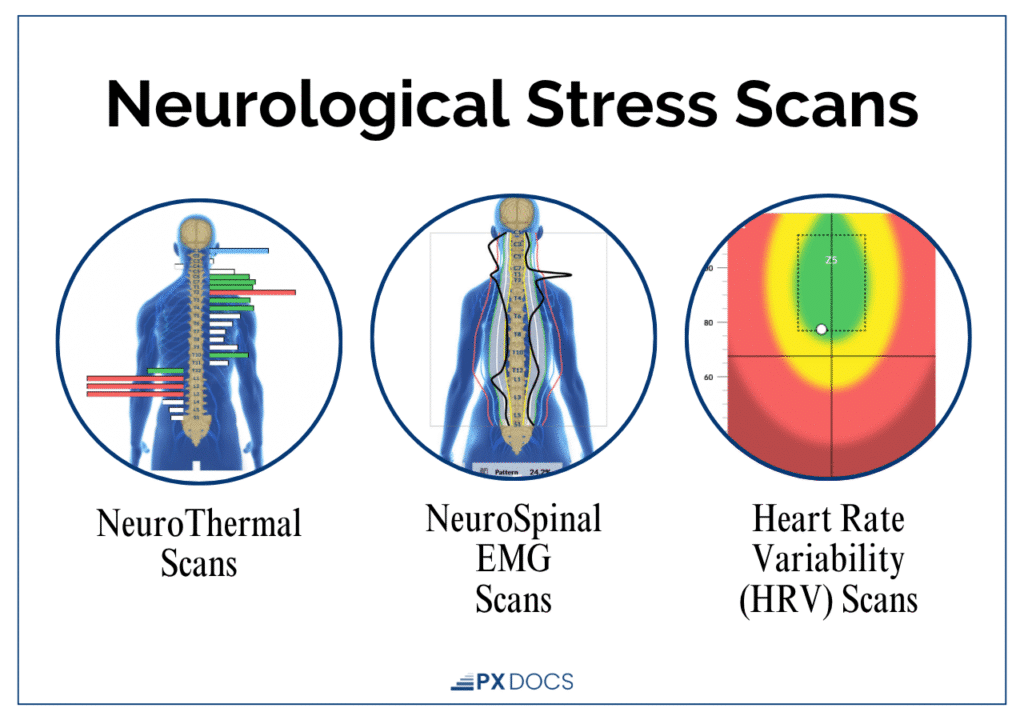
Important: INSiGHT scans are not intended to diagnose, treat, or cure any disease or condition. They provide objective measurements that guide care and track changes over time.
Parents report better frustration tolerance during tasks, more consistent day-to-day performance, improved sleep, supporting skill consolidation, reduced sensory overwhelm that had been blocking practice, and skills they’d been working on suddenly integrating.
Making Practice Actually Work
Whether your child needs nervous system support or not:
- Make it play-based: Kids learn better through play than drills
- 5-10 minutes daily beats hour-long sessions: Short, frequent practice works better
- Follow their interests: Interest drives engagement, which drives learning
- Reduce pressure: Some days are for practice, some for fun
- Combine with heavy work: Jumping jacks or wall pushes before practice helps
- Use everyday moments: Cooking, dressing, and chores all build skills
Supporting Your Child’s Journey
The activities in this guide provide essential practice. Work through them at your child’s pace, focusing on age-appropriate sections.
But remember: if you’ve been doing these activities for months without real progress, if performance varies wildly, if frustration seems bigger than the task—it may be time to address the foundation.
Visit our directory to find a PX Docs practitioner near you who can evaluate your child’s nervous system and determine if Neurologically-Focused Chiropractic Care could help create the foundation for those fine motor skills to finally integrate.
Your instincts about your child are right. When practice isn’t working, there’s a reason, and addressing that reason makes all the difference.
Originally published on PX Docs by Dr. Morgan Reimer.
Synced to River City Wellness for educational purposes.